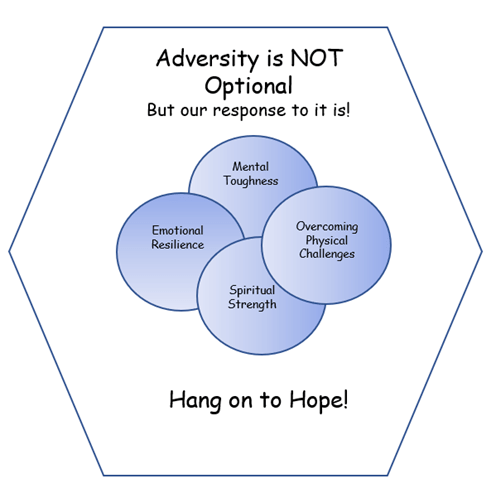
There are several components or factors that have been identified as critical with regard to an individual’s response to adversity and to assisting in creating resilience in our lives.
However, there appears to be no consensus from authors and educators regarding the precise “components” or factors involved in developing Resilience. But most experts agree that a Resilient lifestyle should include at least most of the following components:
- Courage combined with acknowledging and addressing Fear
- An effective Mindset which consists of the thoughts and beliefs we allow to take hold, and then hold on to, in our minds.
- Our Feelings and Emotions
- Grit
- Commitment to Purpose and Goals
- Will Power, Discipline, and Delayed Gratification
- A strong support system – which could include family, friends and other caring individuals both personal and professional.
- Physical Condition
- Spiritual Strength
- Humor and HOPE !
These “components” or factors are often inter-related and the specific topics listed above are subjects that we will come back to often in the future. In one form or another, these inter-related factors can be found in what we refer to as “Keys to Resilience”.
It is our belief that in order to experience growth in developing resilience in our lives, we need to focus on the following four key areas:
Mental Toughness –
Emotional Resilience
Overcoming Physical Challenges
Spiritual Strength.
In future postings, we will explore these keys further.
Developing Resilience
FEELINGS AND EMOTIONS
Listings of Emotions
Throughout the centuries, beginning with Aristotle (384-322 BC), many individuals have attempted to identify and categorize human emotions. Categorization of emotions by these “emotion theorists” generally begins with a listing of “basic” emotions. The theorist will often then go on to include additional emotions in subcategories of the basic emotions.
In their excellent second edition of “The Cognitive Structure of Emotions”, Andrew Ortony, Gerald Clove, and Allan Collins have recapped proposed listings of basic emotions from several “emotion theorists” ….

From: Ortony, Andrew, Gerald Clove, and Allan Collins 2nd Edition (2022). The Cognitive Structure of Emotions. Cambridge University Press. Cambridge CB2 8BS, United Kingdom. Kindle edition, p. 78.
Since there is little agreement even regarding basic human emotions, we have included links to some of the more popular listings:
Aristotle’s Listing – (Found in Book 2 of Aristotle’s “Rhetoric”)
Aristotle identified the following emotions in book 2 of the Rhetoric: Anger, Friendship, Fear, Shame, Kindness, Pity, Indignation, Envy, Love
Robert Plutchik’s Wheel of Emotions
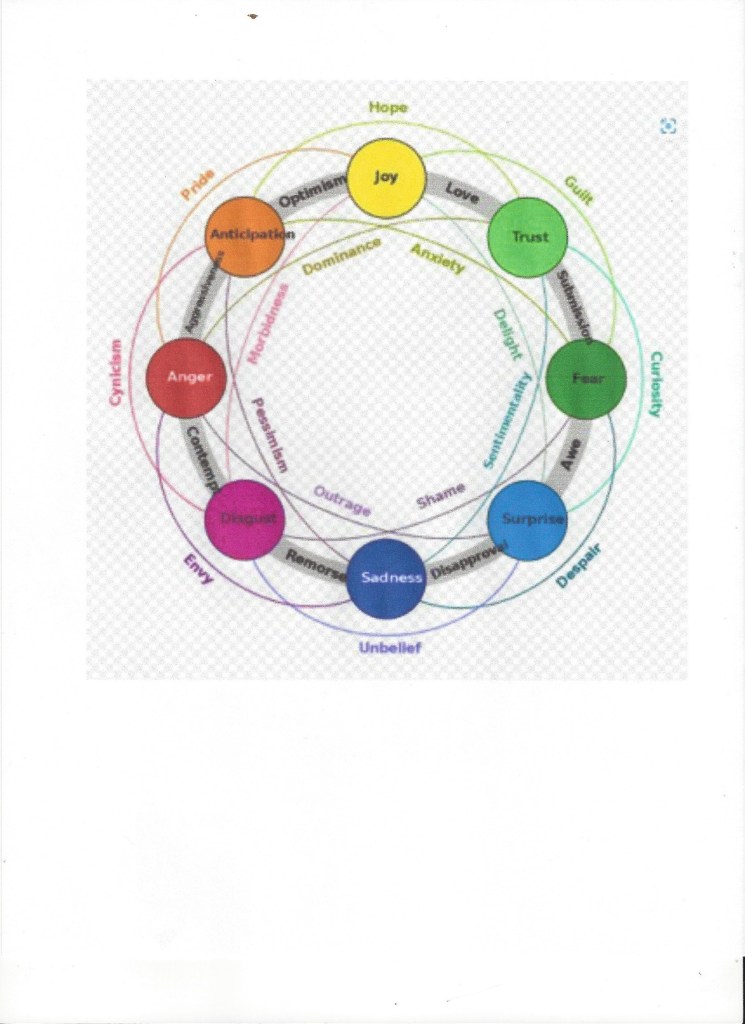
In 1980, Robert Plutchik proposed a classification of general emotional responses which included eight primary emotions: anger, fear, sadness, disgust, surprise, anticipation, trust, and joy. These primary emotions interact with each other and with other secondary emotions in intensity.
Plutchik initially created a wheel of emotions to highlight his theory. He then further refined the wheel to illustrate the interrelationships between the emotions and intensity of the emotional responses. (See image below.) As an example, the primary emotion of anger can vary in intensity if it turns into rage (darker color of red) or if it turns into simply annoyance (lighter color of red). Anger also interacts with disgust. For a further explanation of the theory, click on the link below.
Robert Plutchik’s Theory of Emotion – Envision your Evolution

Individual Emotions
There is a wealth of information available regarding virtually every basic emotion and most subcategories of feelings and emotions. For example, as noted in a recent blog, with regard to the emotions of depression and anxiety, the following articles are helpful in understanding the emotions and actions which a person may consider taking if the emotion leads to a harmful addiction.
Boca Recovery Center – https://bocarecoverycenter.com/addiction/depression
Drugwatch – https://www.drugwatch.com/mental-health/depression
REHABSPOT – www.rehabspot.com/alcohol/alcoholism-treatment/
The Addiction Center – www.addictioncenter.com/addiction/generalized-anxiety-disorder-addiction/
DEALING WITH ADDICTIONS
Additional Resources
https://www.healthyplace.com/addictions
Types of Addictions: Addiction Types | Psychology Today
Recovery: Chapter 5 Recovery: The Many Paths to Wellness, The Surgeon General’s Report on Alcohol, Drugs, and Health https://addiction.surgeongeneral.gov/sites/default/files/chapter-5-recovery.pdf
DEALING WITH ALCOHOLISM
In dealing with the specific addiction of alcoholism, one of the most effective ways has been to utilize the methodology and procedures prescribed by Alcoholics Anonymous, an International mutual aid fellowship whose members follow the following 12-Step approach to recovery:
Alcoholics Anonymous World Services, Inc.. Twelve Steps and Twelve Traditions (p. 5). Alcoholics Anonymous World Services, Inc.. Kindle Edition.
- Step 1: We admitted we were powerless over alcohol—that our lives had become unmanageable.
- Step 2: Came to believe that a Power greater than ourselves could restore us to sanity.
- Step 3: Made a decision to turn our will and our lives over to the care of God as we understood Him.
- Step 4: Made a searching and fearless moral inventory of ourselves.
- Step 5: Admitted to God, to ourselves, and to another human being the exact nature of our wrongs.
- Step 6: Were entirely ready to have God remove all these defects of character.
- Step 7: Humbly asked Him to remove our shortcomings.
- Step 8: Made a list of all persons we had harmed, and became willing to make amends to them all.
- Step 9 : Made direct amends to such people wherever possible, except when to do so would injure them or others.
- Step 10: Continued to take personal inventory and when we were wrong promptly admitted it.
- Step 11: Sought through prayer and meditation to improve our conscious contact with God, as we understood Him, praying only for knowledge of His will for us and the power to carry that out.
- Step 12: Having had a spiritual awakening as the result of these Steps, we tried to carry this message to alcoholics, and to practice these principles in all our affairs.
From: Alcoholics Anonymous World Services, Inc.. Twelve Steps and Twelve Traditions (pages 5- 8). Alcoholics Anonymous World Services, Inc.. Kindle Edition.
Web site: http://www.aa.org/alcoholics-anonymous
Another important organization is Al-Anon … an International mutual aid organization for people who have been impacted by another person’s alcoholism. Al-Anon is a “worldwide fellowship that offers a program of recovery for the families and friends of alcoholics, whether or not the alcoholic recognizes the existence of a drinking problem or seeks help.”
Website: al-anon.org (http://al-anon.org)
DEALING WITH DEPRESSION
What is Depression?, Who gets it?, and What are the signs and symptoms of Depression? – Website: https://www.nimh.nih.gov/health/topics/depression
Major Depressive Disorder – https://en.wikipedia.org/wiki/Major_depressive_disorder
Melancholia – https://en.wikipedia.org/wiki/Melancholia


COURAGE
Contents of File to Download
Introduction
Courage
Courage Defined
The 3 Types of Courage
Developing Courage
Fear
Fear Defined
The 3 types of Fear
Addressing and Combating Fear
Living the Courageous Life
Examples to Follow
- John O’Leary
- Jerry White
- Margie Warrell
- Family and Friends
Resources to assist you on your journey
(Click on the “Download” button below to bring up the content associated with Courage)
The Many Faces and Voices of Hope
Greg Thomas
Helen Keller
Nelson Mandela
Jim (Jimmy) Valvano
Darryl Strawberry

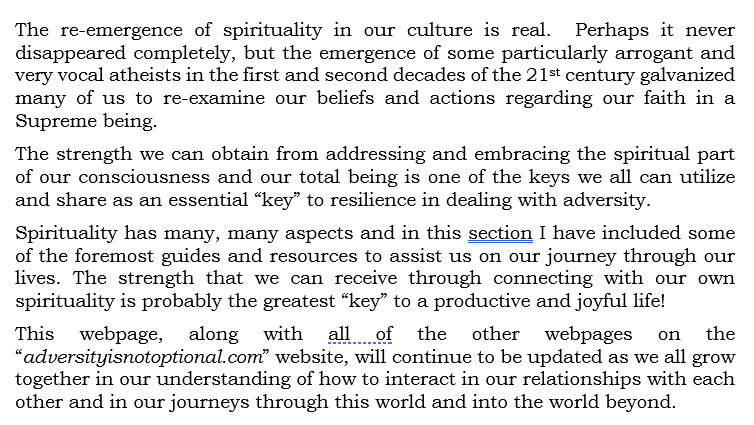
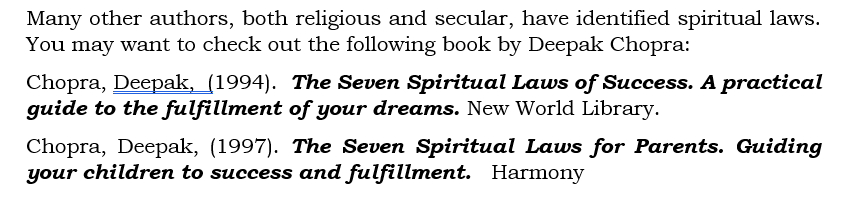
SPIRITUAL LAWS

https://biblewisdomhub.org/7-spiritual-laws-in-the-bible
https://www.mindbodygreen.com/articles/the-12-universal-laws-and-how-to-practice-them
https://www.abundancenolimits,com/33-spiritual-laws-of-the-universe/
SPIRITUAL POWERS


What Are The 12 Spiritual Powers And How They Can Transform Your Life [Answered!]
SPIRITUAL GIFTS AND SPIRITUAL GROWTH


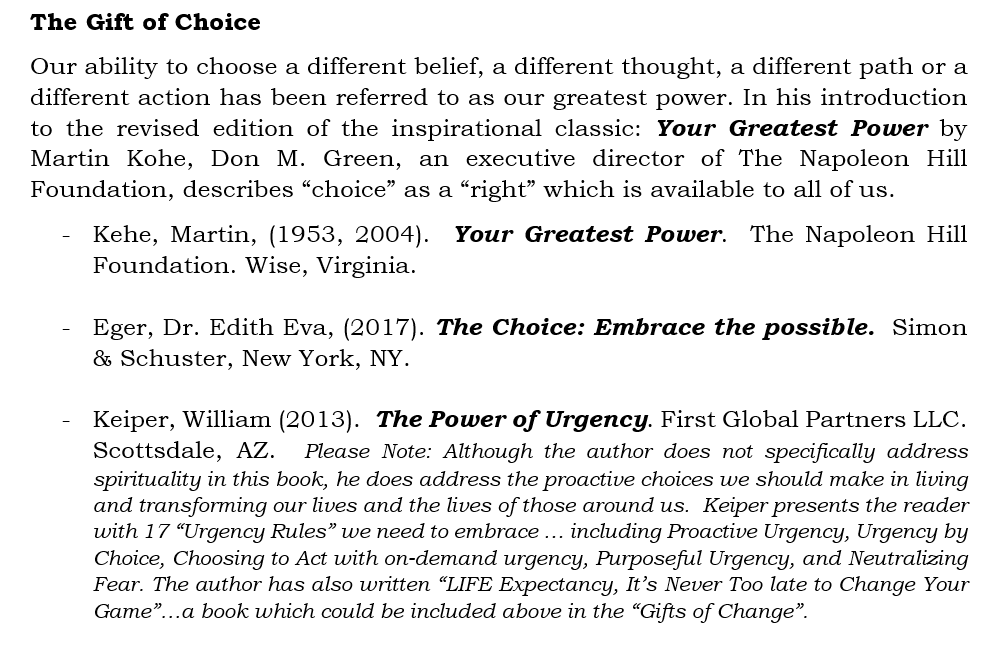


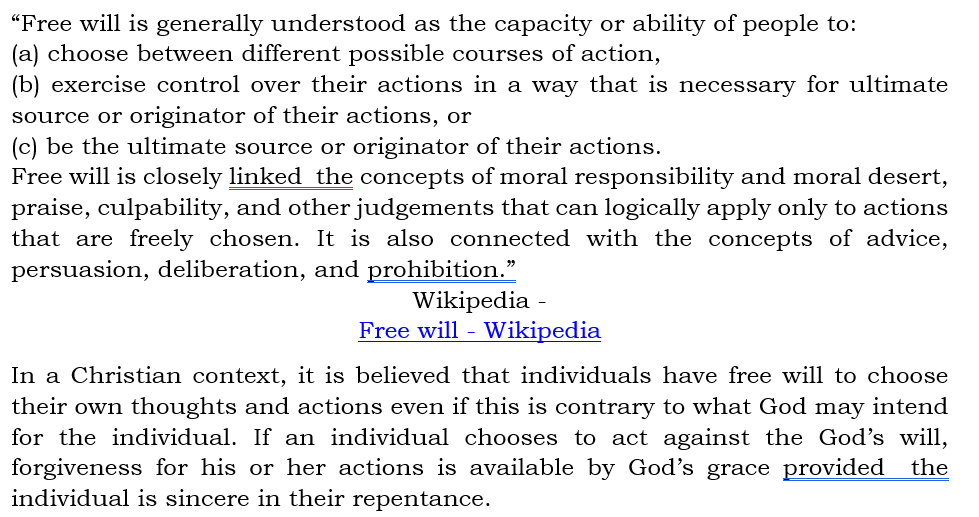

SPIRITUAL SURRENDER
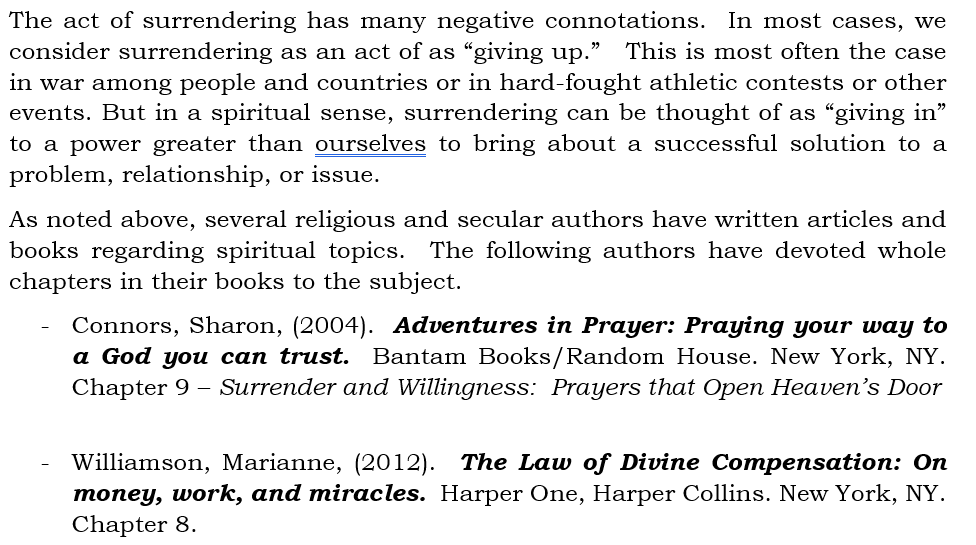
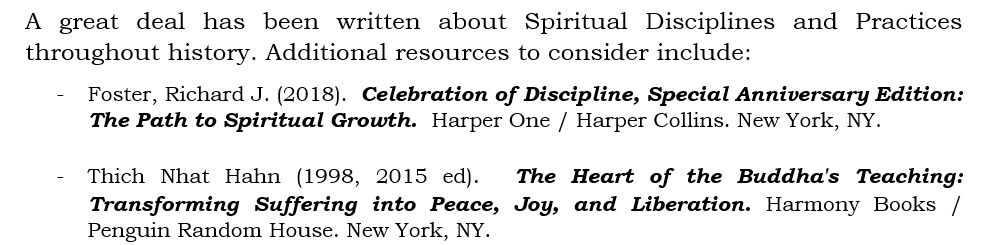
SPIRITUAL DISCIPLINES / SPIRITUAL PRACTICES
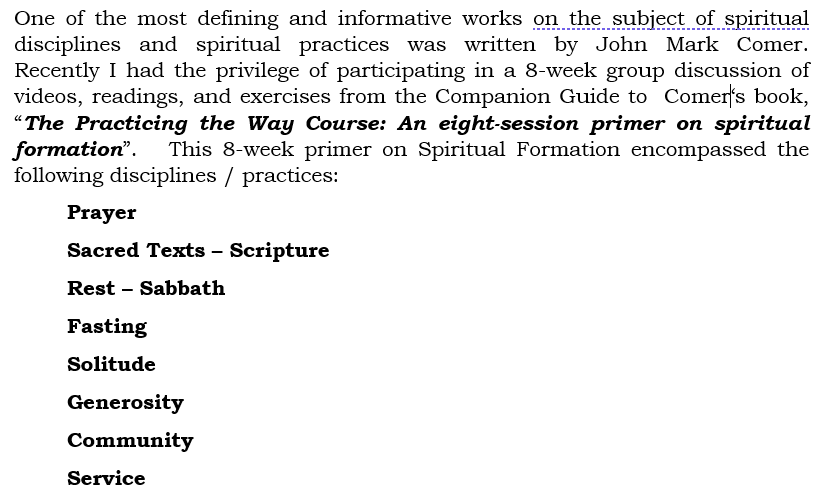
https://www.practicingtheway.org/course
https://bridgetown.church/series/practicing-the-way
SPIRITUAL DNA / THE SOUL
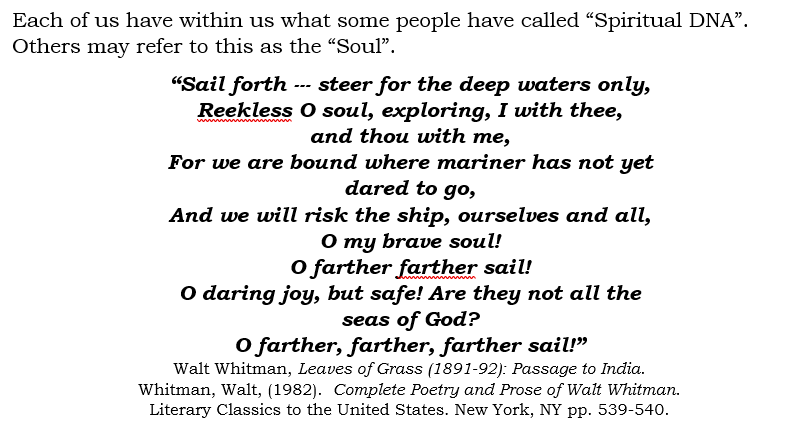
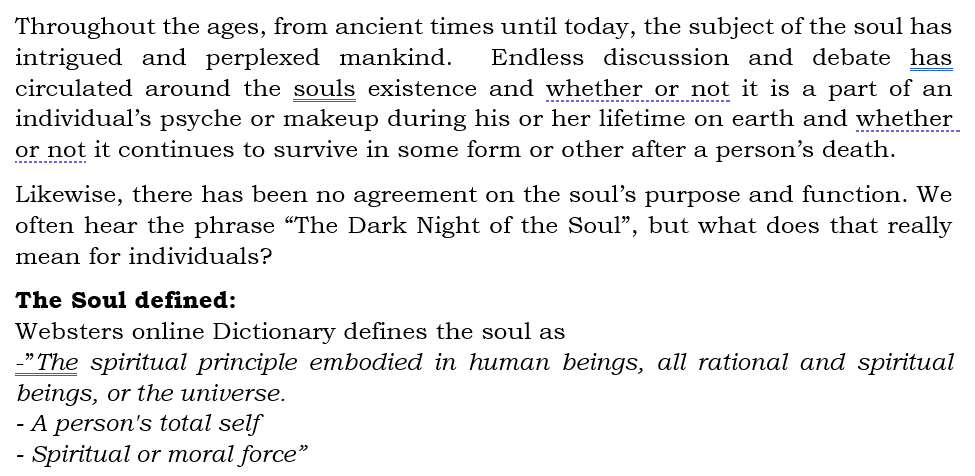
https://en.wikipedia.org/wiki/Soul
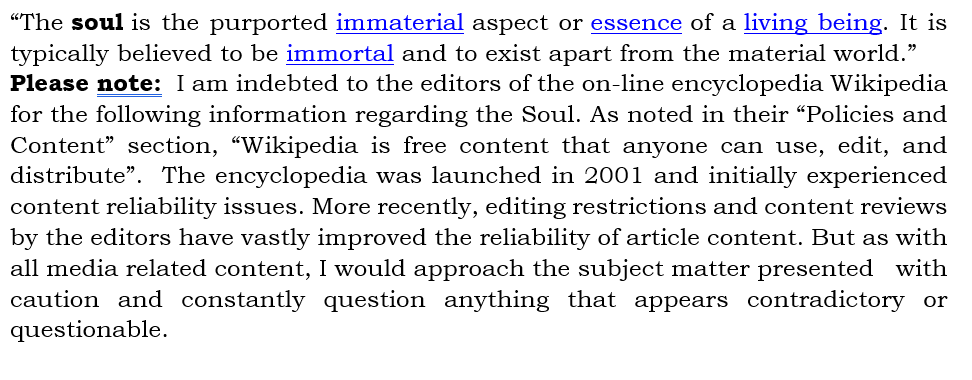
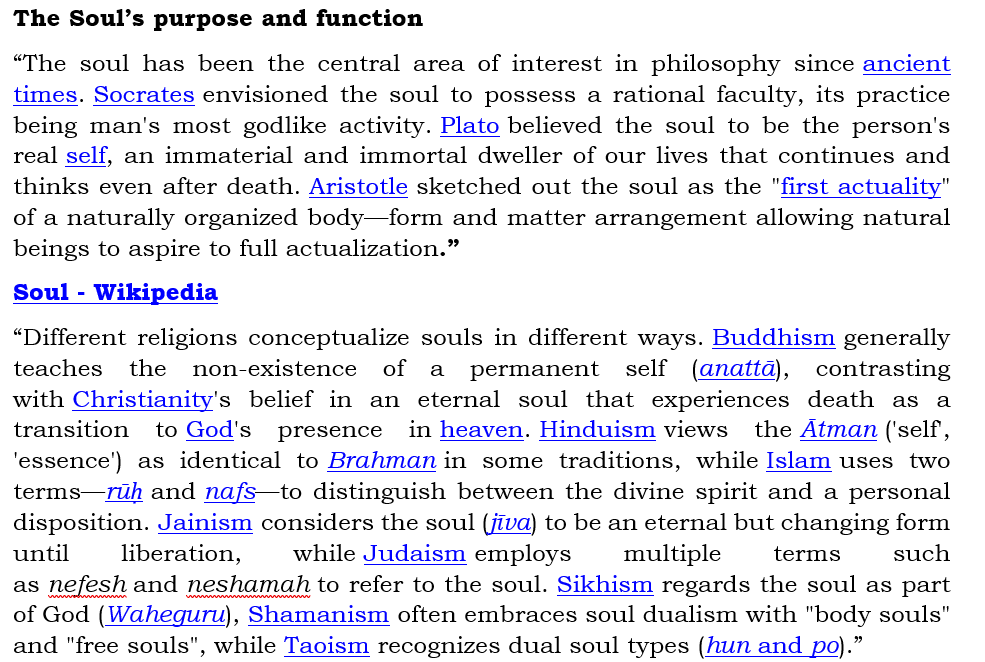
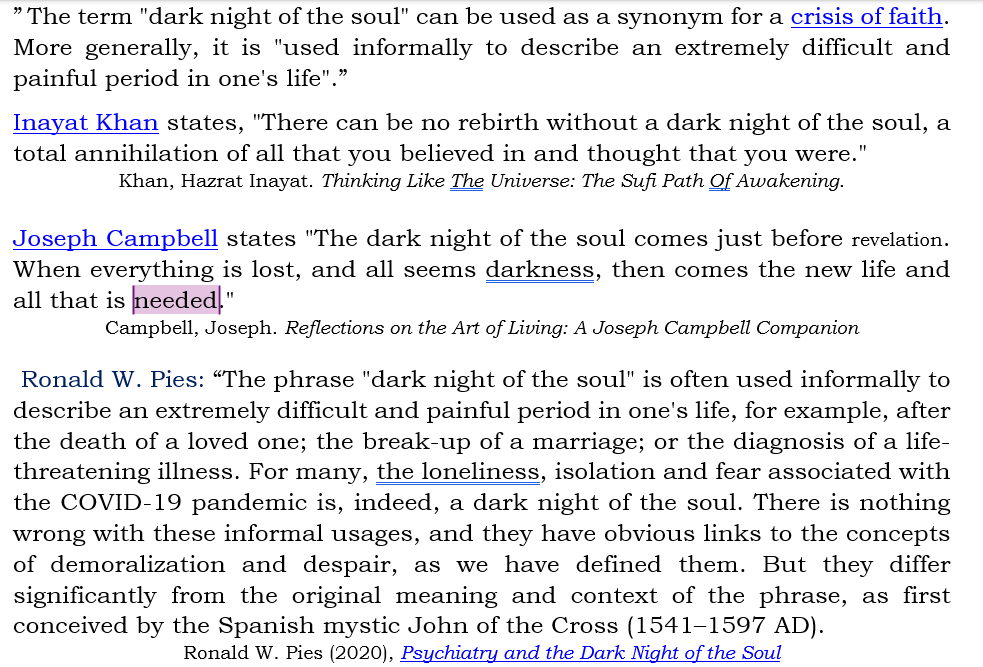
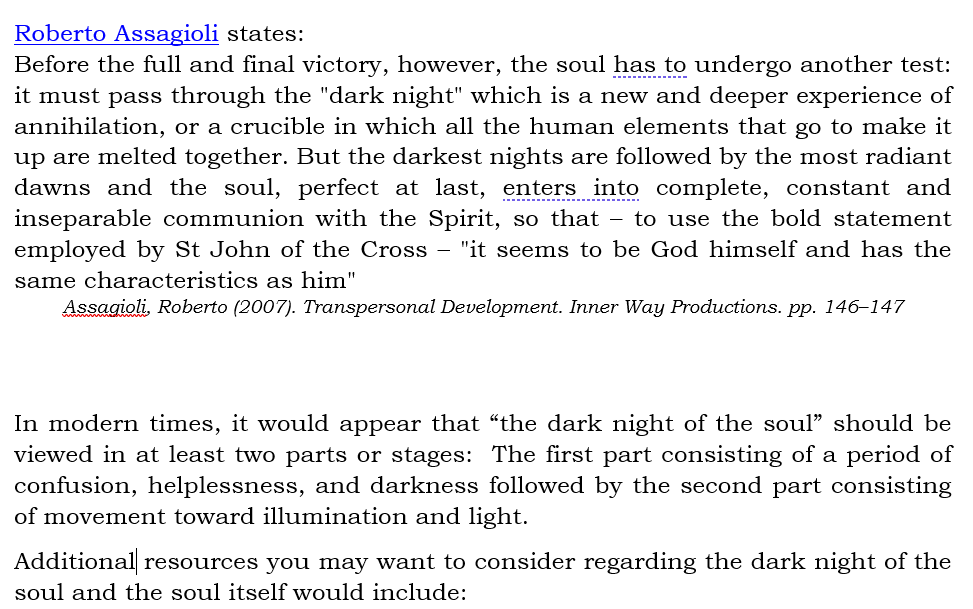
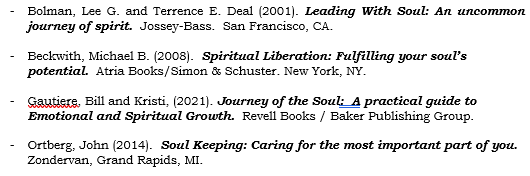
The Dark Night of the Soul
https://en.wikipedia.org/wiki/Dark_Night_of_the_Soul

https://ccel.org/ccel/john_cross/dark_night
https://www.gnostic.org/underhill/mysticism_part_2_09_night.html
Summary of The Dark Night of the Soul by St. John of the Cross
 Hanging on to Hope!